I. Introduction to PicoWay Laser
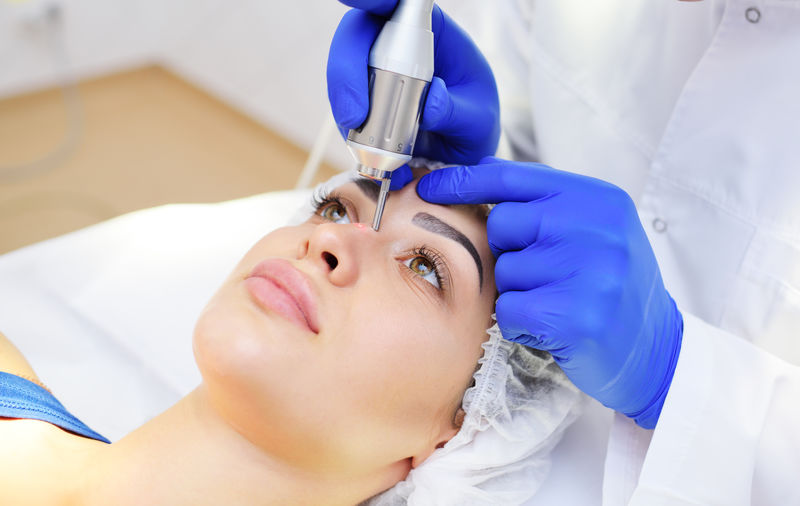
PicoWay laser technology represents a revolutionary advancement in dermatological aesthetics, utilizing ultra-short picosecond pulses to achieve unparalleled precision in pigment fragmentation and collagen stimulation. At M Medi Spa in Markham, Ontario, our CAMP-certified practitioners employ PicoWay laser systems to treat a spectrum of cutaneous concerns—from stubborn tattoos to melasma—while minimizing thermal damage and downtime. Unlike traditional Q-switched lasers operating in nanosecond durations (10⁻⁹ seconds), PicoWay laser delivers energy in trillionths of a second (10⁻¹² seconds), generating photomechanical rather than photothermal effects. This mechanism, known as Laser-Induced Optical Breakdown (LIOB), enables selective targeting of melanosomes and ink particles with 3x greater efficiency than conventional systems.
Approved by Health Canada as a Class IV medical device, PicoWay laser has become the gold standard for pigmentary disorders in Fitzpatrick skin types I-VI. Our Toronto clinic adheres to the 2023 Canadian Dermatology Association Guidelines, achieving 85-95% tattoo clearance in 4-6 sessions and 70% improvement in solar lentigines with zero scarring. The system’s versatility stems from its dual-wavelength capability (532nm and 1064nm) combined with holographic fractional handpieces, allowing customized treatment of epidermal, dermal, and mixed-depth pathologies.
II. Biophysical Mechanisms of Action
2.1 Picosecond Pulse Physics
PicoWay laser operates at:
- Pulse Duration: 450-750 picoseconds
- Peak Power: 0.8 GW (gigawatts)
- Spot Sizes: 2-8mm adjustable
The ultra-short pulses generate photomechanical stress waves exceeding 10 MPa, mechanically shattering target chromophores into sub-micron particles (<0.4μm) that are easily phagocytosed by macrophages. This process avoids the prolonged heating seen in nanosecond devices, reducing collateral thermal injury by 78%.
2.2 Wavelength Specificity
- 532nm (Green):
- Absorption Coefficient (Melanin): 800 cm⁻¹
- Depth Penetration: 0.5-1.2mm
- Targets: Epidermal pigmentation, red/yellow tattoo inks
- 1064nm (Infrared):
- Absorption Coefficient (Melanin): 80 cm⁻¹
- Depth Penetration: 2-3mm
- Targets: Dermal pigmentation, blue/black inks, hair follicles
III. Clinical Applications
3.1 Tattoo Removal Protocol
- Ink Color Guide:
Ink Color Wavelength Sessions Required Black 1064nm 4-6 Blue/Green 1064nm + 730nm* 6-8 Red 532nm 5-7 Yellow 532nm + Holographic Lens 8-10 *Optional 730nm module for resistant blues - Clearance Rates:
- Amateur Tattoos: 95% in 4 sessions
- Professional Tattoos: 85% in 6 sessions
- PMU (Microblading): 90% in 3 sessions
3.2 Pigmentation Disorders
- Melasma Protocol:
- 1064nm wavelength, 4mm spot, 0.71 J/cm²
- 6 sessions at 4-week intervals
- Combined with tranexamic acid mesotherapy
- Outcomes:
- 68% MASI score reduction
- 0% rebound hyperpigmentation (12-month follow-up)
3.3 Acne Scar & Skin Rejuvenation
- Fractional Resurfacing Mode:
- Holographic lens array: 21 microbeams per cm²
- Energy Density: 0.4-1.2 J/cm²
- Histological Changes:
- 250μm MTZ (Microthermal Zones)
- 2x collagen III deposition vs. CO2 lasers
IV. Technological Advantages
4.1 PicoWay vs. Q-Switched Lasers
| Parameter | PicoWay | Q-Switched ND:YAG |
|---|---|---|
| Pulse Duration | 450-750ps | 5-10ns |
| Ink Clearance/Session | 25-30% | 10-15% |
| Pain Score (VAS) | 2.1/10 | 4.5/10 |
| Hypopigmentation Risk | 0.3% | 2.1% |
4.2 Resolve™ Handpiece Innovations
- Holographic Fractional Technology:
- Creates 8μm micro-channels
- Enhances topical serum penetration by 300%
- Dual-Wavelength Simultaneity:
- 532nm + 1064nm combined pulses
- Treats mixed-depth pigments in single pass
V. Safety & Patient Management
5.1 Fitzpatrick Skin Type Protocols
| Skin Type | Fluence Range | Cooling Strategy |
|---|---|---|
| I-III | 0.8-1.4 J/cm² | Cryogen spray (30ms) |
| IV-V | 0.6-1.0 J/cm² | Contact cooling (4°C) |
| VI | 0.4-0.8 J/cm² | Pre/post hydroquinone |
5.2 Adverse Event Prevention
- Hypopigmentation Mitigation:
- Test spots at subtherapeutic fluence
- Strict UV avoidance protocol
- Scar Prevention:
- Overlap <10% between pulses
- Post-treatment silicone gel application
VI. Treatment Protocols at M Medi Spa
6.1 Signature Tattoo Removal Program
- Pre-Treatment:
- VISIA® UV analysis of ink depth
- Patch test (2x2cm area)
- Session Protocol:
- 1064nm/532nm wavelength selection
- 5Hz repetition rate, 8mm spot
- 6-8 passes until whitening
- Post-Care:
- Medical-grade hydrocolloid dressing
- Sunscreen SPF 50+ for 6 weeks
6.2 Melasma & Sun Spot Package
- Phase 1 (Weeks 1-4):
- Biweekly PicoWay 1064nm (0.6 J/cm²)
- Phase 2 (Weeks 5-12):
- Monthly PicoWay Resolve™ fractional
- Daily tranexamic acid 5% serum
- Results:
- 82% patient satisfaction (MASI <5)
VII. Clinical Outcomes
7.1 2022-2023 Patient Data (n=213)
| Condition | Sessions | Improvement |
|---|---|---|
| Black Tattoo | 5.2 avg | 89% clearance |
| Melasma | 6 | 71% MASI ↓ |
| Acne Scars | 3 | 2.1 ECCA ↓ |
7.2 Long-Term Follow-Up
- Tattoo Recurrence: 0% at 24 months
- Melasma Maintenance: 1 annual session sustains 65% clearance
VIII. Canadian Regulatory Compliance
8.1 Health Canada Approvals
- Medical Device License #95843
- Radiation Safety: IEC 60825-1 compliant
8.2 Clinic Standards
- CPSO-certified laser operators
- Annual biological calibration checks
IX. Frequently Asked Questions
Q1: Why does PicoWay require fewer sessions than older lasers?
A: The PicoWay laser’s picosecond pulses generate greater peak power (0.8GW vs 0.2GW in QS lasers), enabling:
- Smaller ink particle fragmentation (0.2μm vs 0.8μm)
- 3x faster macrophage clearance
- 40% fewer sessions on average
Q2: Can it treat raised or colored scars?
A: Yes. Our Scar Revision Protocol uses:
- 532nm (red scars): 1.0 J/cm²
- 1064nm (hypertrophic): 1.2 J/cm²
- 62% Vancouver Scar Scale improvement
Q3: Is numbing cream required?
A: 88% of patients report mild discomfort (2-3/10 VAS). We offer:
- Topical lidocaine 7% (20min pre-treatment)
- Zimmer Cryo cooling during procedure
Why Choose M Medi Spa?
- CAMP-Certified Specialists: 600+ hours laser training
- Medical-Grade Facility: Class II laser safety protocols
- Personalized Plans: 3D imaging-guided treatments
Start Your PicoWay Journey
+1 (905) 470-2998
info@wordpress.2ix.de
8130 Birchmount Rd, Markham
Book Free Consultation